
Integrated Quality Intelligence
Connect industry-standard quality testing equipment directly to bin digital ledgers. Every measurement becomes part of the permanent traceability record.
From Disconnected Records to Unified Intelligence
Traditional quality testing creates disconnected data points: paper forms, spreadsheets, and manual transcription introduce errors and delays. SmartBin transforms quality testing into an integrated workflow where every measurement is automatically linked to specific bins, enabling storage routing decisions, predictive analytics, and complete traceability.
Quality data can be applied at the granularity matching your operational protocols: per-bin for high-value lots, per-load for routine operations, per-lot for grower accountability, or per-orchard for block-level analysis. The flexibility ensures quality testing never becomes a packing line bottleneck.
Pressure Testing
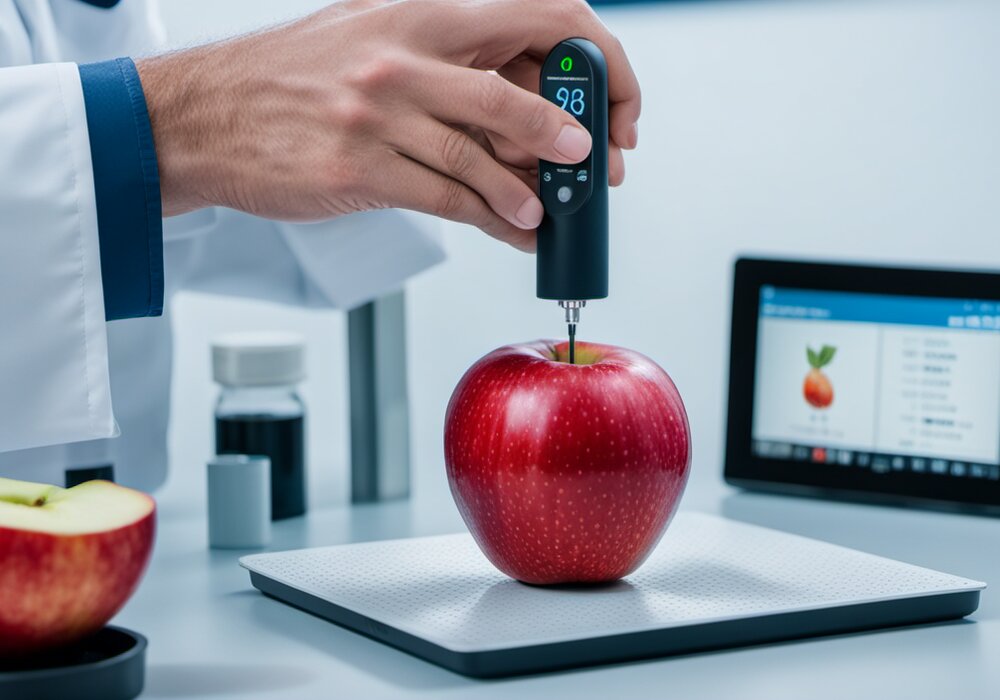
Penetrometer measurements following Washington State University protocols provide objective firmness data for storage routing and pack-out scheduling.
Protocol Details:
- 11mm tip penetration to 7.9mm depth
- Blush and non-blush side sampling
- Averaging methodology for consistency
- Automatic linking to bin RFID tags
Data Captured:
- Pressure in pounds (lbs)
- Sample side identification
- Fruit size for correlation analysis
- Tester identification and timestamp
Storage Routing Implications
High Pressure (16+ lbs)
Firm fruit suitable for long-term CA storage (6-12 months). Premium fresh market potential.
Medium Pressure (12-15 lbs)
Standard storage duration (3-6 months). Monitor for firmness decline during storage.
Low Pressure (<12 lbs)
Priority pack-out recommended. Short storage window or processing consideration.
Brix Measurement
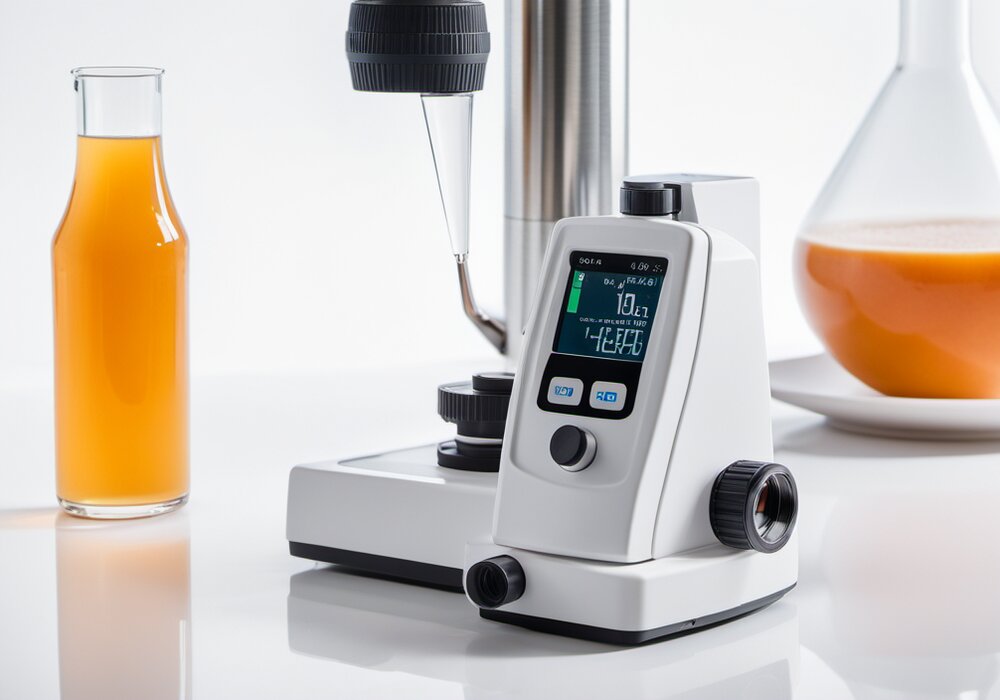
Refractometer integration captures soluble solids concentration (SSC) indicating sugar content and maturity. Higher Brix generally indicates sweeter, more mature fruit preferred by consumers.
Measurement Process:
- Juice extraction from representative sample
- Digital refractometer with temperature compensation
- Percentage soluble solids concentration
- Variety-specific interpretation thresholds
Typical Values by Variety:
- Honeycrisp: 12-14% optimal
- Cosmic Crisp (WA38): 14-16% optimal
- Gala: 12-14% optimal
- Fuji: 14-16% optimal
Starch-Iodine Index
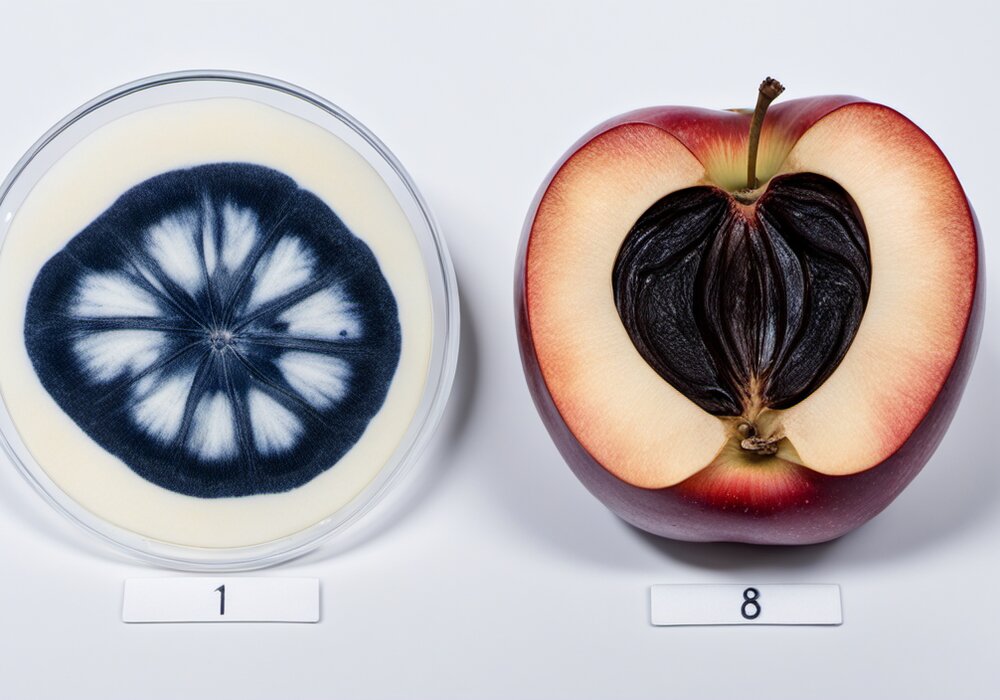
Visual pattern assessment of starch-to-sugar conversion indicates harvest maturity. SmartBin supports multiple reference charts used across the industry.
Supported Charts:
- Cornell (1-8 scale)
- WTFRC (Washington Tree Fruit Research Commission)
- Honeycrisp-specific scale
- WA38 Cosmic Crisp scale
- Quebec scale
- ENZARUIT (New Zealand) scale
Features:
- Pattern type classification
- Photograph documentation for audit trails
- Historical trending per grower/block
Storage Routing by Starch Index
Low Index (1-3)
High starch content. Fruit harvested early. Suitable for longest CA storage with gradual starch-to-sugar conversion.
Medium Index (4-5)
Optimal maturity for most varieties. Balance of starch and sugar. Standard storage duration recommended.
High Index (6-8)
Advanced maturity. Most starch converted to sugar. Priority pack-out or short-term storage only.
DA Meter Integration
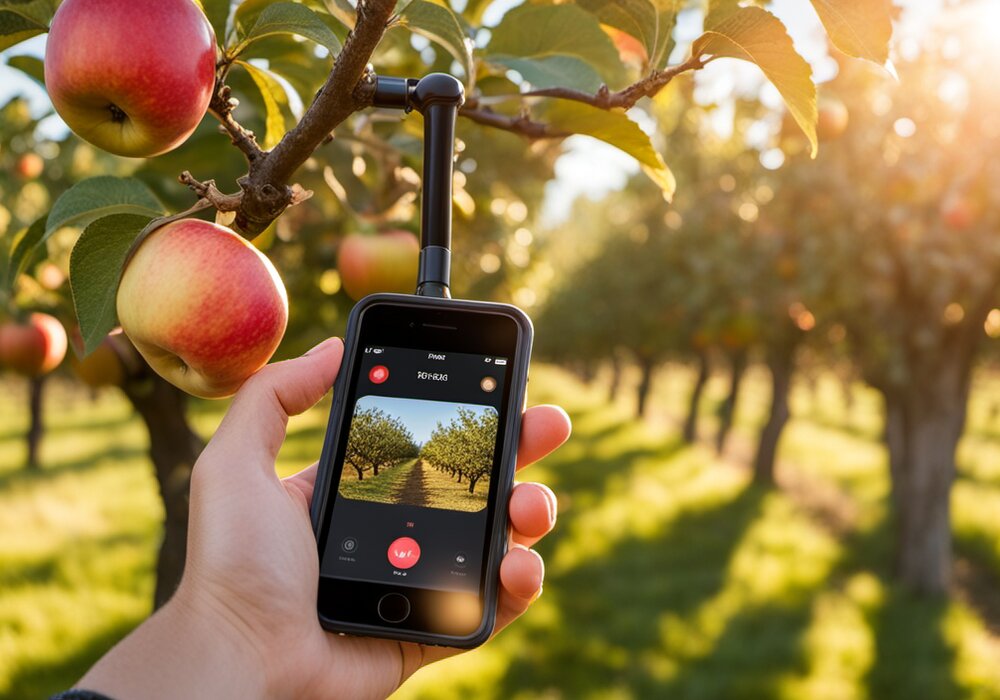
Non-destructive chlorophyll index measurements provide maturity assessment without damaging fruit. Variety-specific optimal ranges enable precise harvest timing and storage routing.
Technology:
- Near-infrared spectroscopy
- Chlorophyll-a absorption measurement
- Index of Absorbance Difference (IAD)
- Bluetooth integration with SmartBin app
Honeycrisp Research (Dr. John DeLong):
- 0.35-0.59: Optimal maturity for long-term storage
- >0.60: Immature - increased bitter pit risk
- <0.35: Over-mature - senescent breakdown risk
Variety-Specific Thresholds
| Variety | Optimal Range | Notes |
|---|---|---|
| Honeycrisp | 0.35-0.59 | Critical for bitter pit prevention |
| Gala | 0.40-0.70 | Wide harvest window |
| Fuji | 0.30-0.50 | Late-season variety |
| Granny Smith | 0.50-0.80 | Higher chlorophyll retention |
| Cosmic Crisp | 0.35-0.55 | Similar to Honeycrisp |
Benefits of DA Meter Integration
- Non-destructive assessment preserves fruit
- Rapid measurement (2-3 seconds per fruit)
- Objective, repeatable results
- Field-portable for orchard assessment
- Correlates with storage disorder risk
- Automatic data sync with SmartBin platform
Streif Index Calculation
SmartBin automatically calculates the Streif Index, a composite maturity indicator combining firmness, soluble solids, and starch testing results.
Formula
Where:
- Firmness = Pressure test result (kg/cm²)
- SSC = Soluble Solids Concentration (Brix %)
- Starch Index = Scale value (1-10)
Interpretation
Suitable for long-term CA storage
Standard CA storage recommended
Priority pack-out or short storage
Quality Testing Workflow
Seamless integration from receiving dock to storage assignment.
1. Receiving Team Samples Fruit
Quality technician selects representative sample from incoming load based on sampling protocol (per-bin, per-load, or per-lot).
2. Tests Performed
Pressure, Brix, starch-iodine, and/or DA meter measurements conducted using integrated equipment connected via Bluetooth to SmartBin tablet.
3. Data Entry & Bin Linkage
Results automatically linked to bin RFID tags via tablet interface. Optional photo documentation for starch patterns.
4. Storage Routing Recommendation
SmartBin analyzes quality data against variety-specific thresholds and generates storage room assignment recommendation.
5. Permanent Ledger Recording
All quality data becomes part of bin's permanent digital ledger, enabling future correlation analysis and compliance reporting.
Ready to Integrate Your Quality Testing?
Schedule a demonstration to see how SmartBin can connect your existing quality equipment to a unified traceability platform.